Granddad's Camera

A pixel-art wildlife photography game for iPhone and Android

Find Britain's wildlife. Then wait for the shot.

You're a budding nature photographer with your granddad's old film camera and an empty field journal. Badgers come out of the sett at dusk in spring. Puffins carry sand eels to their burrows on Skomer in June. Get the place, the season and the hour right, keep still, and the journal fills with your photographs and the real story of every species.

Download on the App StoreGet it on Google Play See what's about Free to start on iPhone and Android
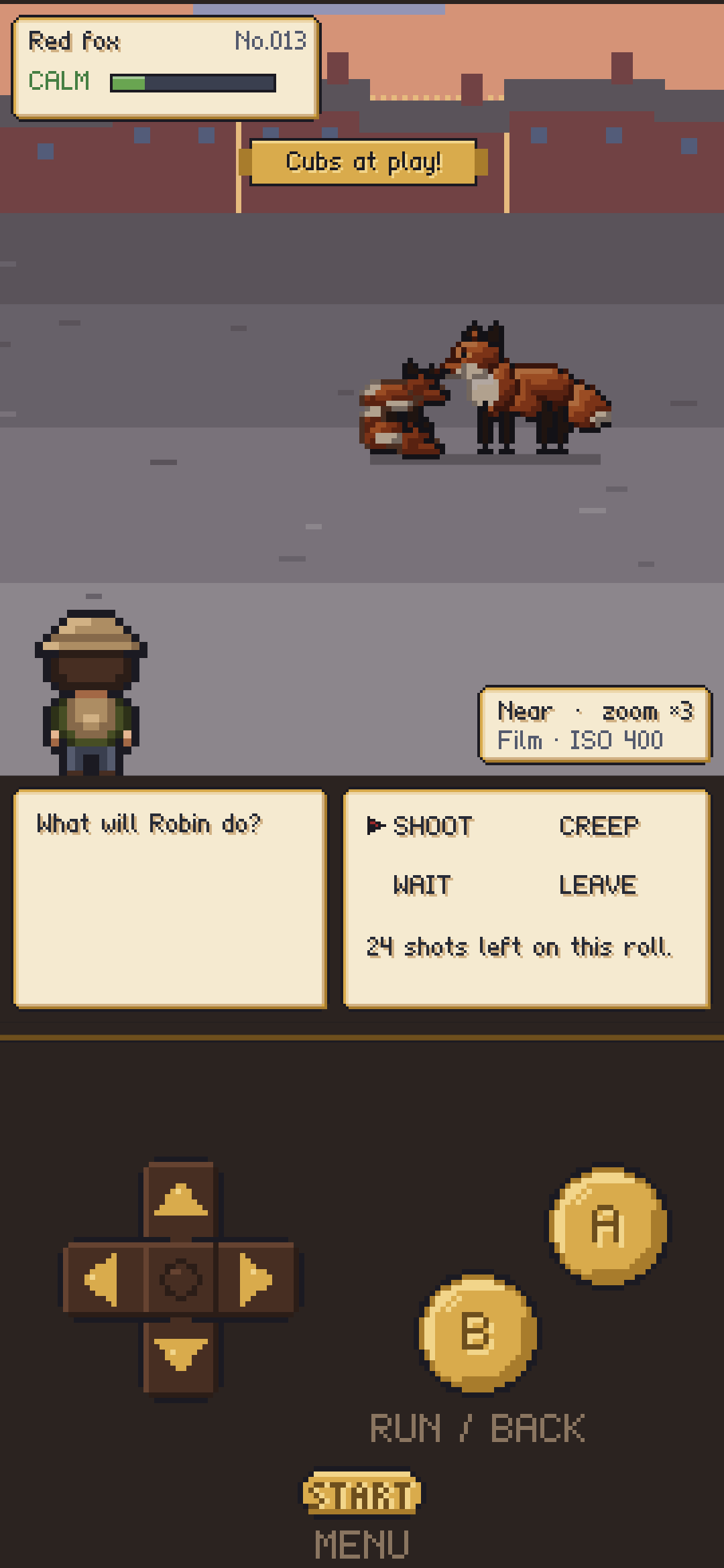
The game on a phone: a red fox in a Millbrook alley at dusk, with the SHOOT, CREEP, WAIT and LEAVE menu and the control deck below.

The almanac

What's about?

Every animal in the game keeps to its real calendar and clock, and the rare ones really are rare. Pick a place, a month and a time of day to see who you're likely to meet, and roughly how long you'd sit quietly in the game to see one. This is the same data the game uses.

Place
Month
Early May
Light

Waits are in game time, and the game's clock runs fast. Walking about, an hour passes in a real minute. Sit still at a bench, a hide or a boat, and it passes in four real seconds. A month lasts two game days.

How a photograph happens

Read the signs, keep still, time the shutter

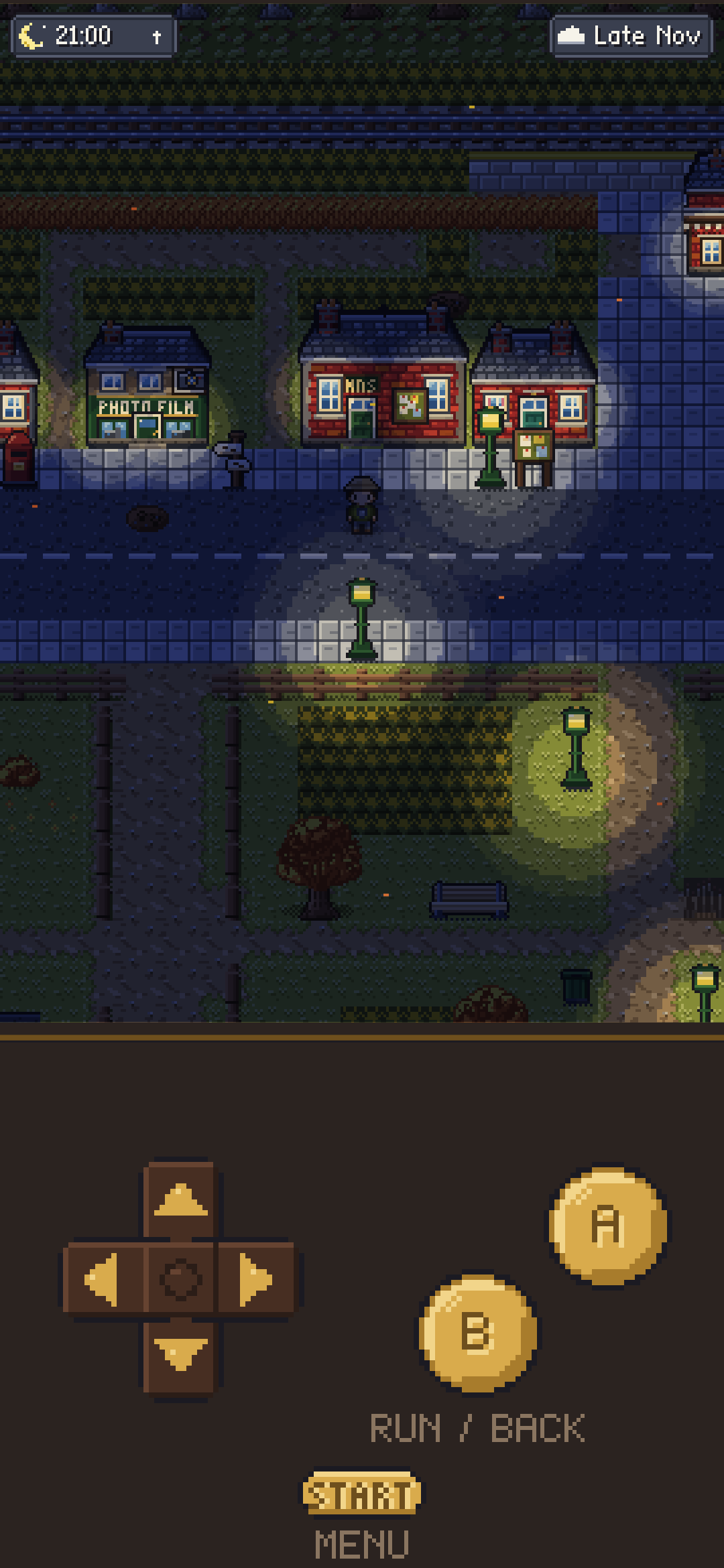
  1. Millbrook at night: street lamps pool light on the High Street.

    Be in the right place

    Field signs tell you what's about: a latrine by the canal, spoil heaps at a sett, cones stripped by a red squirrel. People tell you how to see it. Ask around: everyone local knows something. Then walk slowly through the long grass, or sit at a bench, a hide or the rail of a boat.

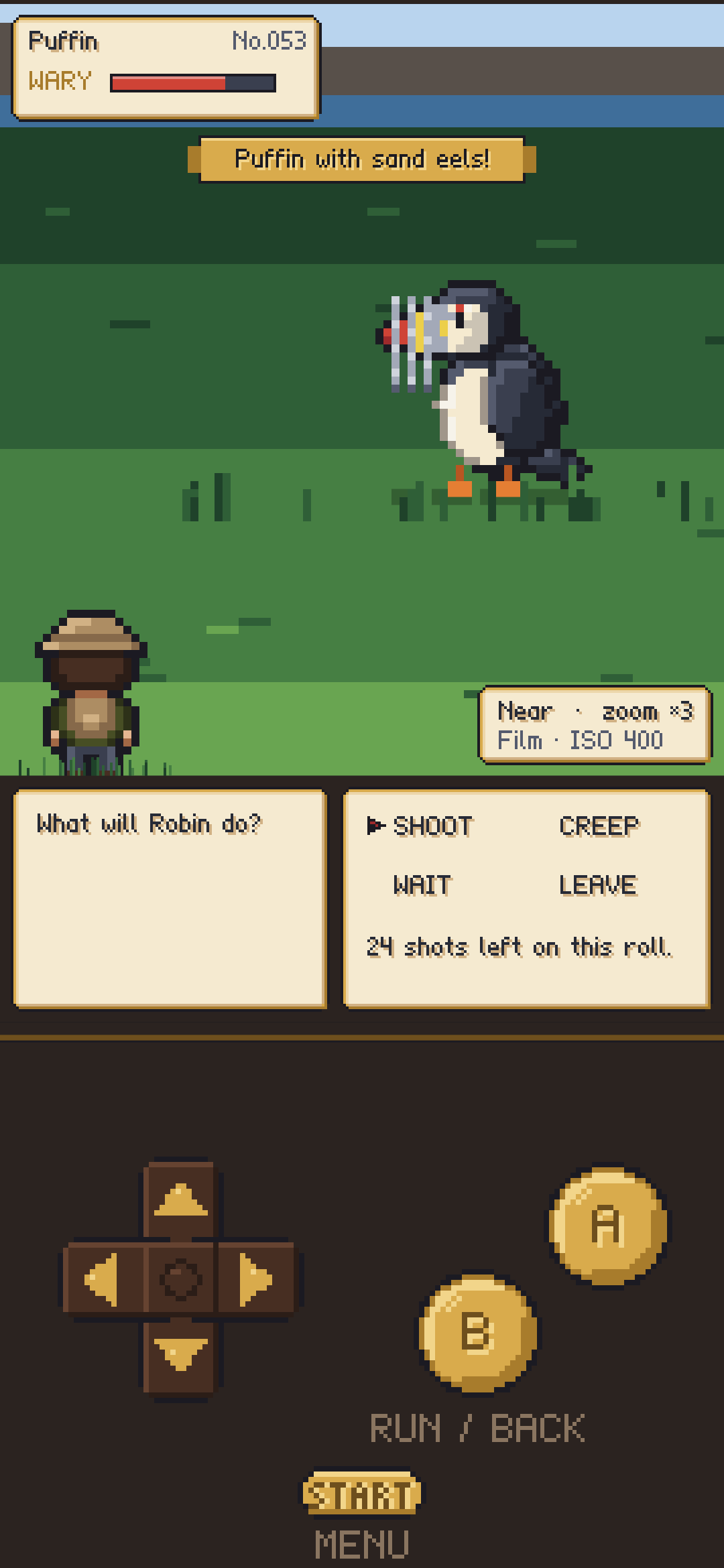
  2. A puffin carrying sand eels, with its alert meter rising.

    Creep, or wait

    Every move raises its alert, from CALM to BOLT! Mind the wind: deer, foxes and badgers smell you coming from upwind. Wait, and it settles, and you may see the rare moments: a murmuration, boxing hares, a stag roaring in the rut.

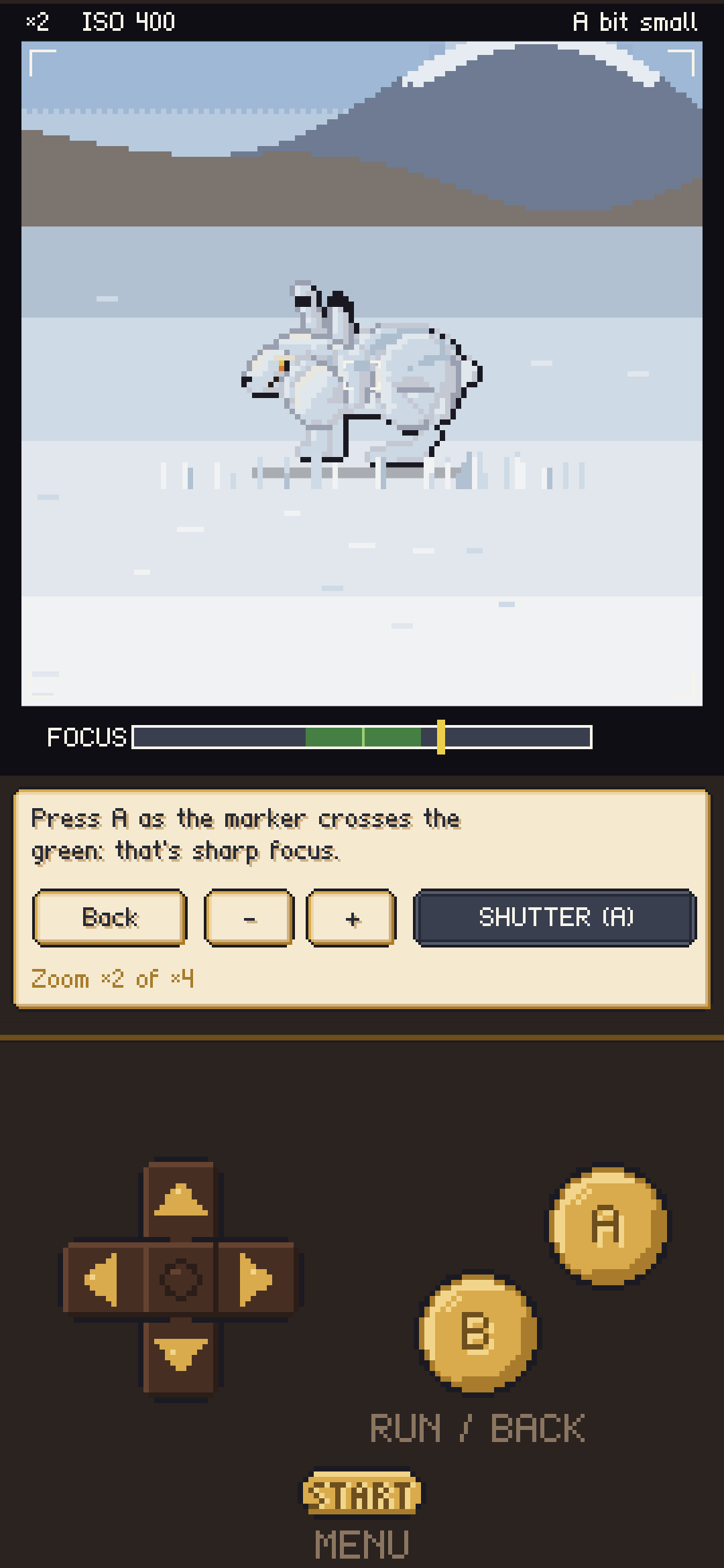
  3. The viewfinder: a mountain hare in its white winter coat, with a focus bar.

    Frame it and focus

    Zoom with the lens you can afford, then press the shutter as the focus marker crosses the green. Photos are scored on framing, focus, light, the moment and the mood.

A year out of doors

Always a reason to go back out

Wildlife keeps its own calendar, and so does the game: it knows today's date, where you are, and what the birds are up to.

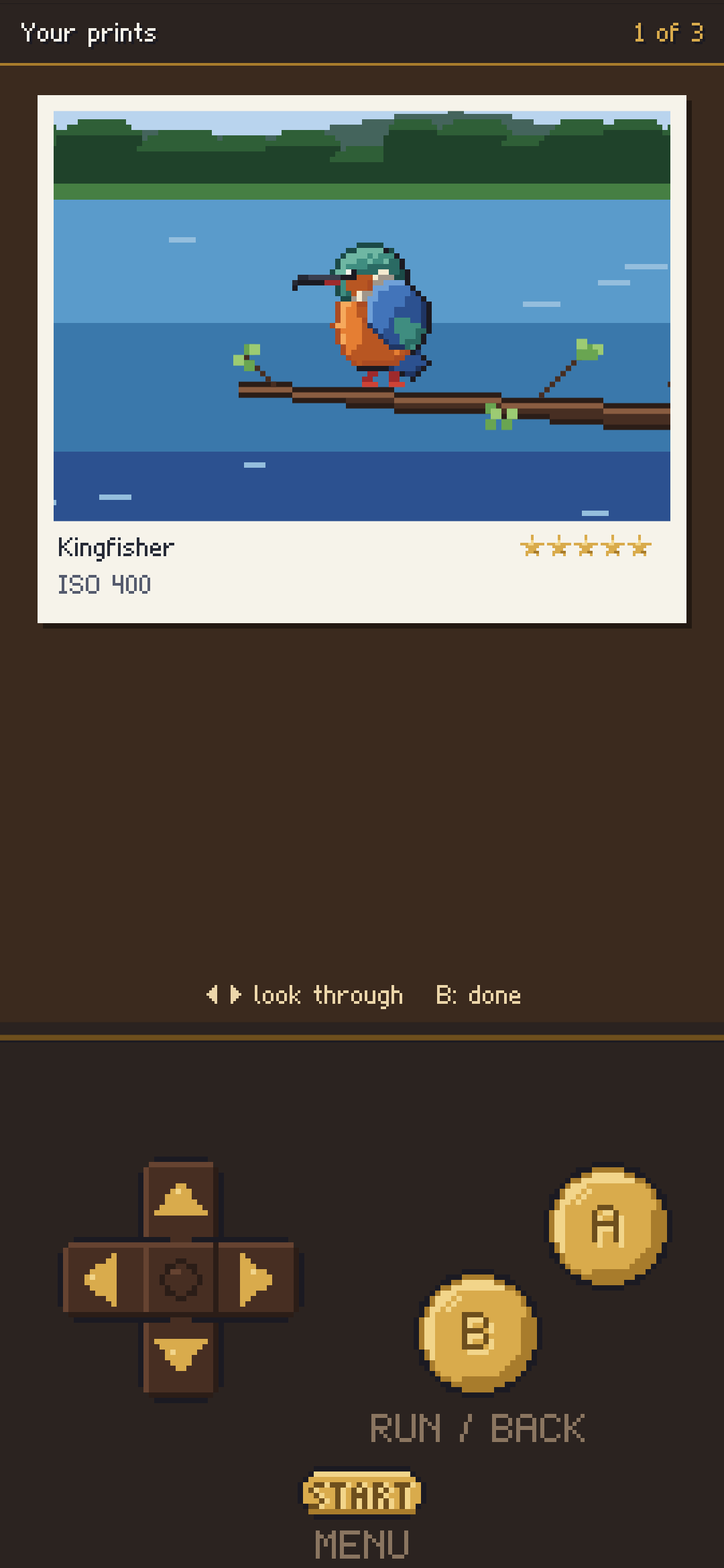
A developed print of a kingfisher on a branch, five stars, ISO 400.

Granddad's film camera

24 shots a roll, and you won't see a single one until Lens & Lark develops them: an hour in town, or overnight by post. Choose the film for the light. The shop won't sell you a digital camera until you've earned two ranger stamps.

ISO 200 · 400 · 800

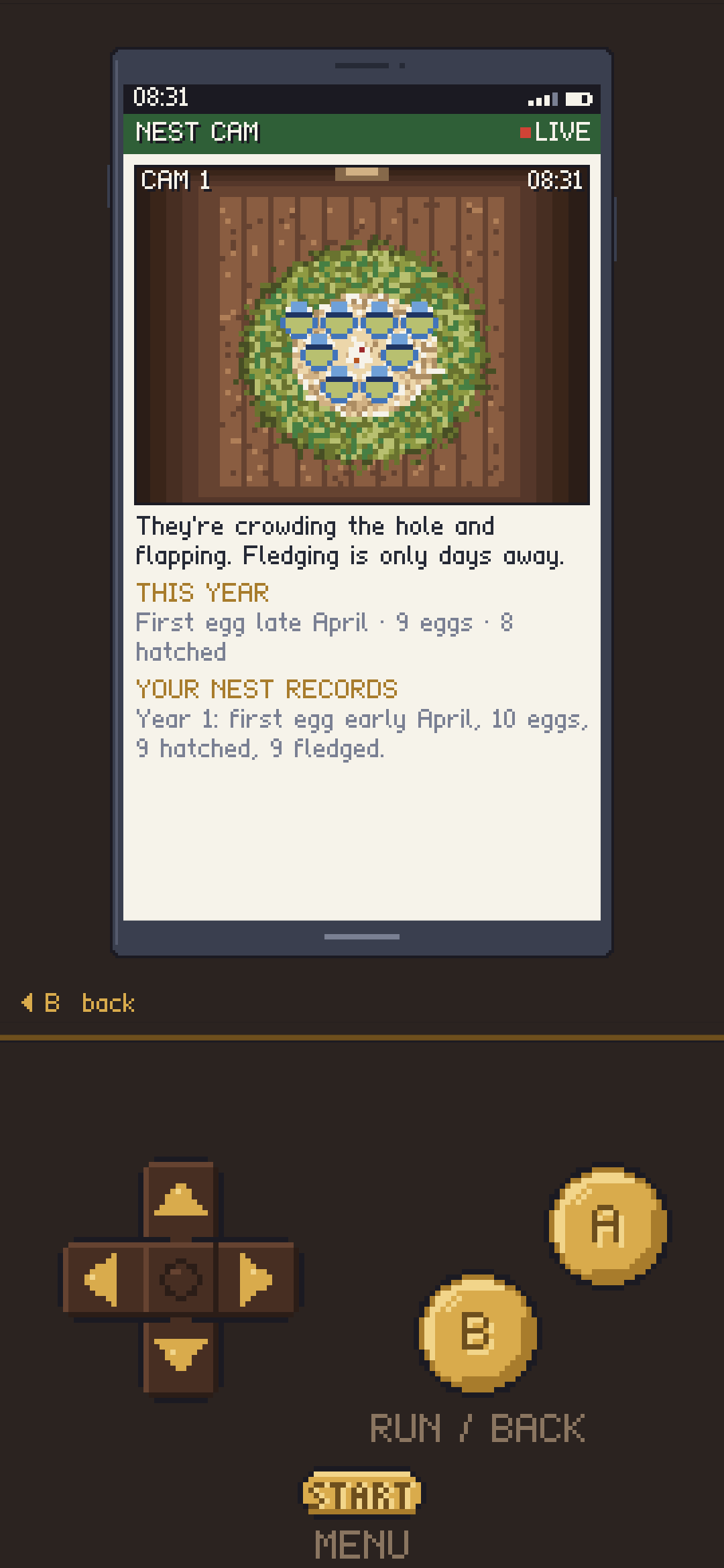
The Nest Cam app on the in-game phone: blue tit chicks crowding a nest box, with this year's record below.

Nest Cam

Put a camera in Granddad's tit box and watch a whole season on your phone, infrared at night. The first egg around 26 April, about nine eggs, two weeks sitting, three in the nest. Not every nest makes it. Send your record to the county recorder.

Timings from the BTO's Nest Record Scheme

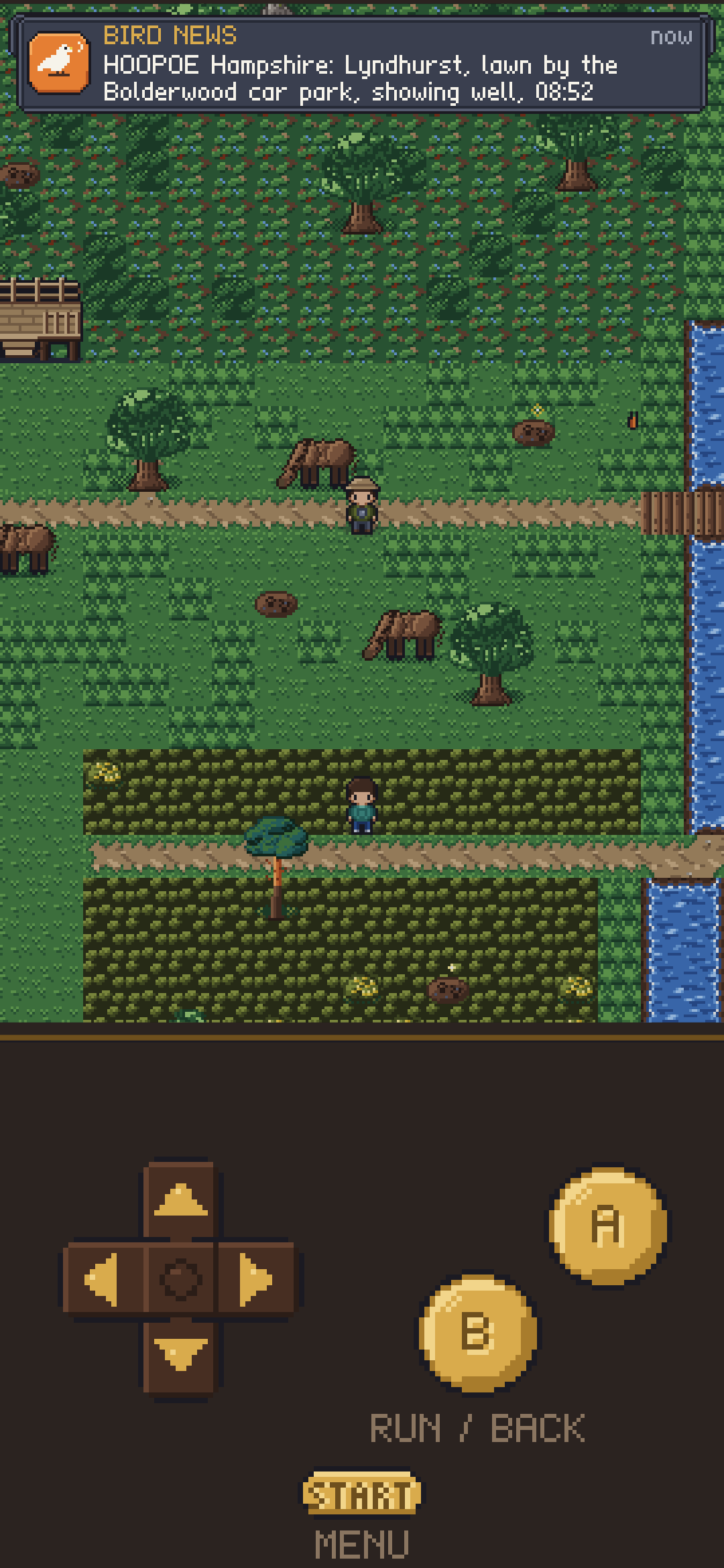
A Bird News notification sliding down over the New Forest: a hoopoe on a lawn near Lyndhurst.

Bird News

Earn two ranger stamps and you're on the bird news. A hoopoe on a New Forest lawn, waxwings by Millbrook station, a snowy owl on the plateau. Rarities stay a day or two. When it pings, go.

12 rare visitors

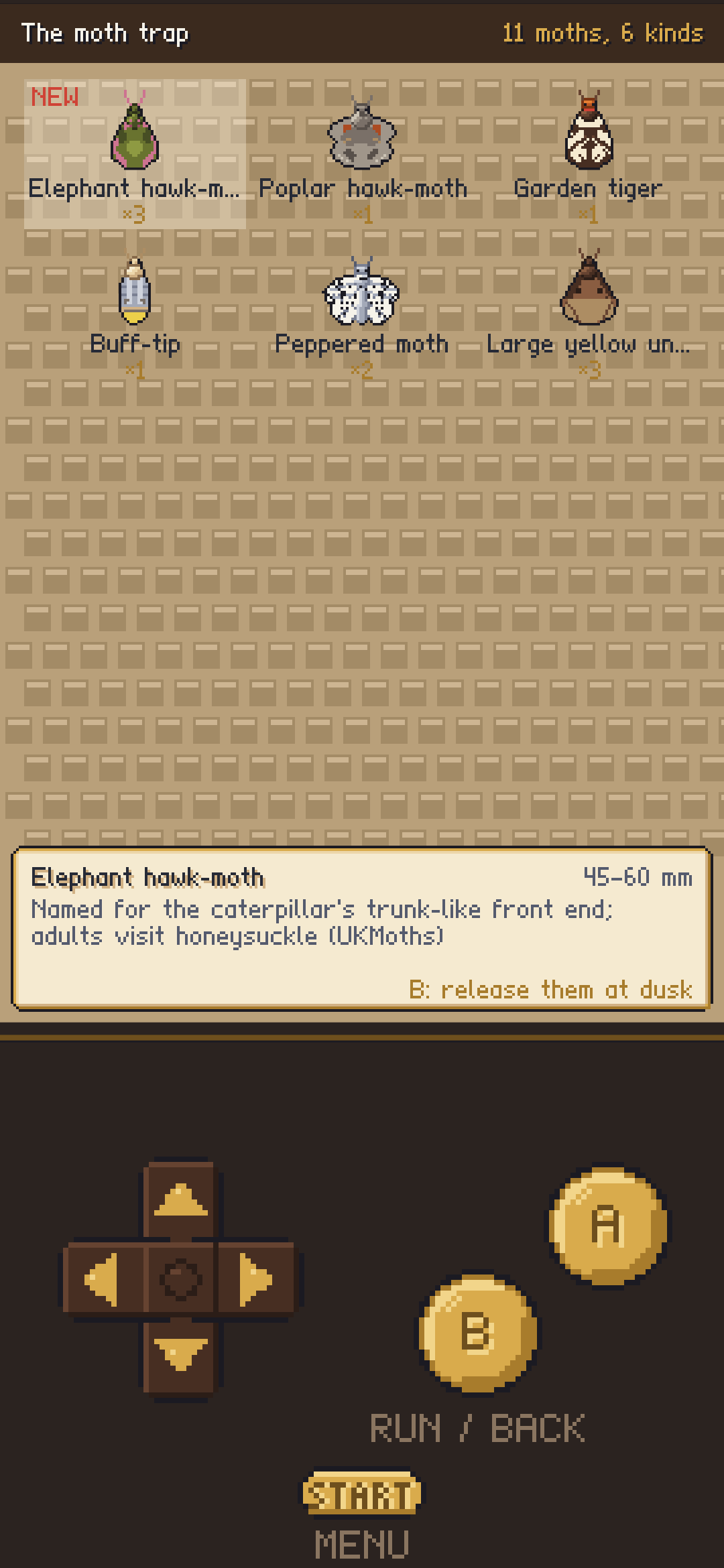
The moth trap in the morning: an elephant hawk-moth, a poplar hawk-moth, a garden tiger, a buff-tip, a peppered moth and a large yellow underwing on the egg boxes.

The moth trap

Switch it on in Granddad's garden at dusk, and open the egg boxes after sunrise. Warm, cloudy, still nights with little moon bring the most. Elephant hawk-moths in June, the December moth in the dark of winter, and once in a lifetime, a Clifden nonpareil.

24 moths, by real flight season and moon

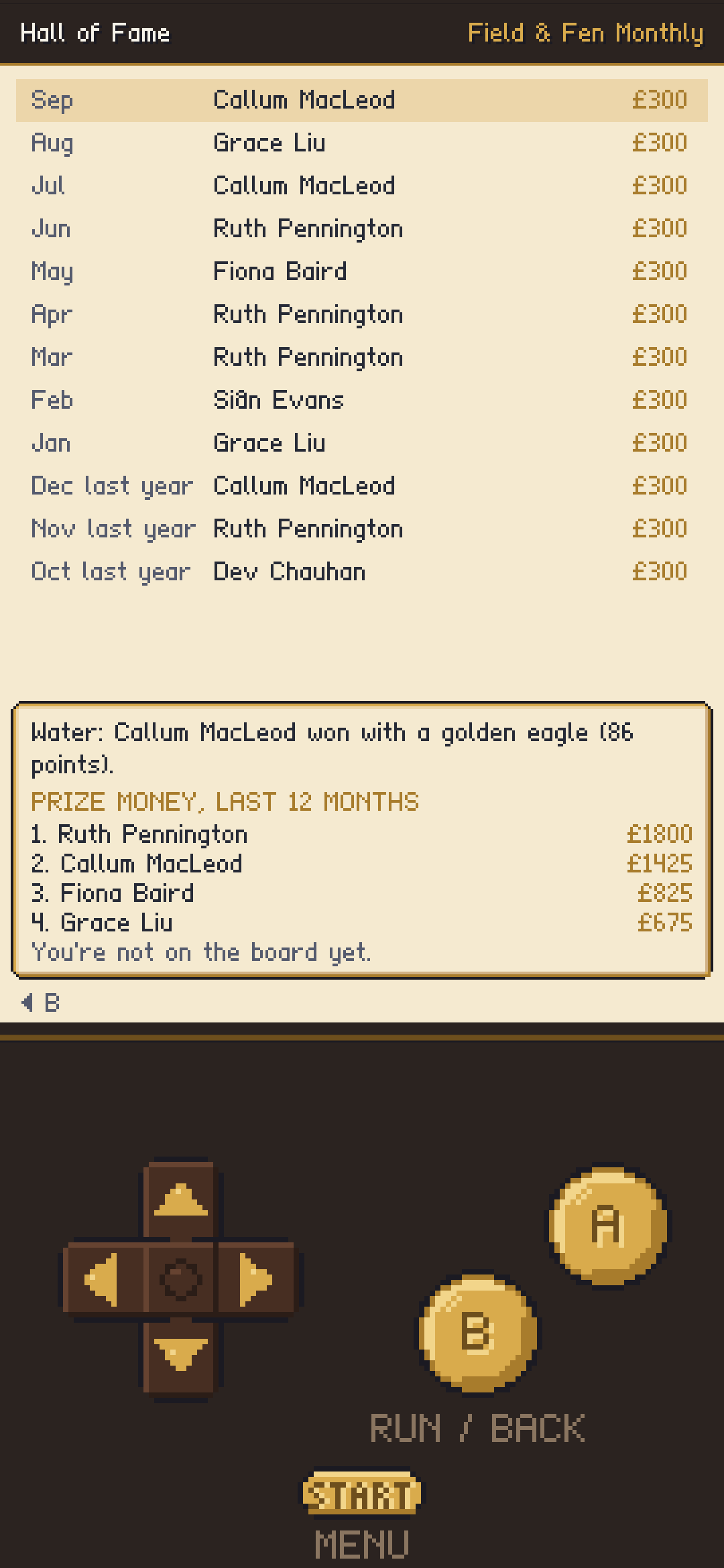
The Hall of Fame at the Nature Society: each month's winner and the prize money table.

Field & Fen Monthly

A new theme every month, and a Hall of Fame of local photographers to beat. Win it, and the magazine pays out.

£300 · £150 · £75 (in-game)

More to find

Photograph each species' behaviours, from cubs at play to a stag's roar. Rare colour forms turn up at their real odds, like a white fallow deer, and there are local legends like Old Scar the otter. Ten conservation stories and Granddad's List, from bats in a barn due for demolition to seal pups and the Marine Code. Meet a species for the first time and it's a dark shape and a field sign: name it, and you'll approach it better. And every real day, Sarah texts a new challenge.

20 rare forms and named locals

Granddad's garden

Make it wild, and they'll come to you

Pat's stall on the station forecourt sells everything for a wildlife garden, from your first day in Millbrook. Whatever you buy turns up in Granddad's garden and changes who visits, the way it would in a real one. Granddad will send you to Pat once you've photographed three species.

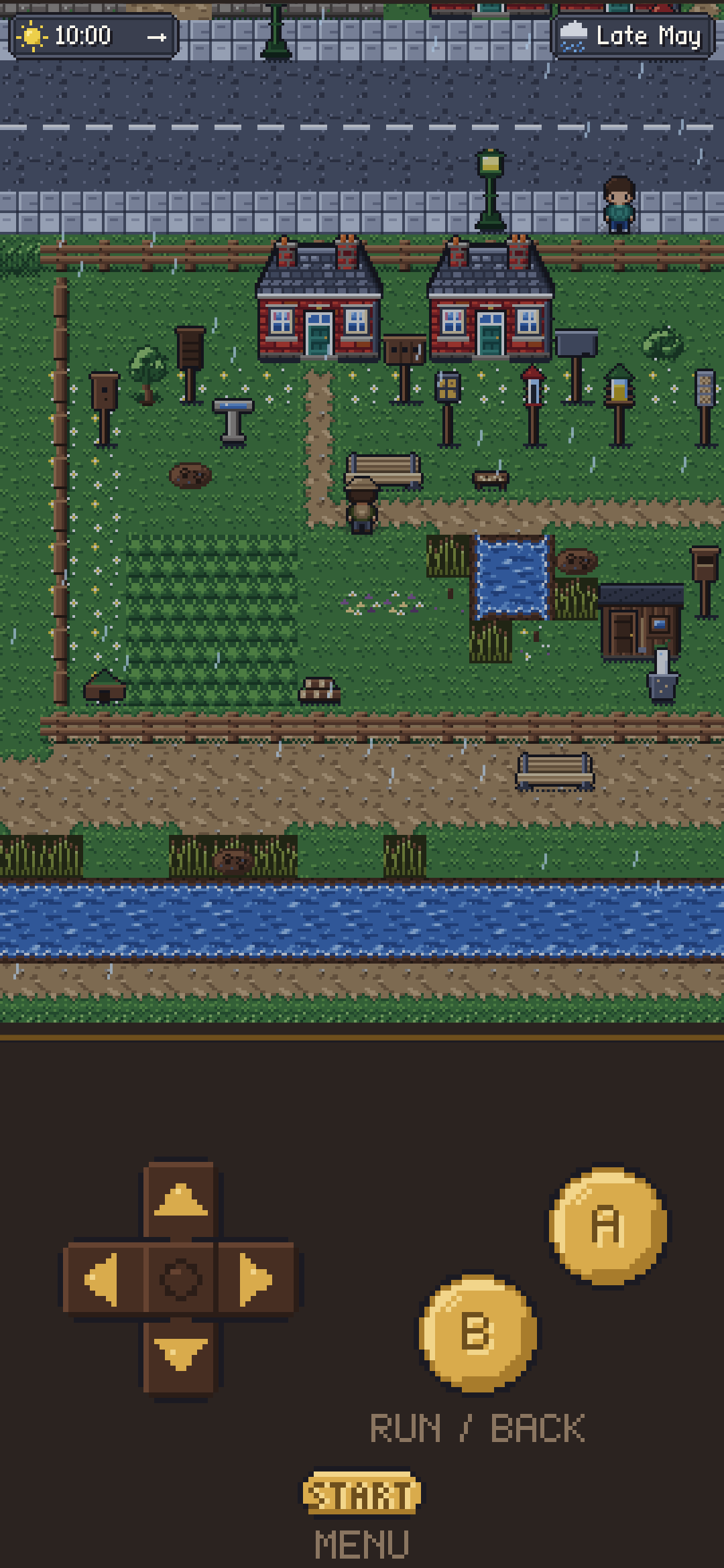
Granddad's garden with everything in: feeders, a bird bath, nest boxes, a log pile, a wildflower patch and the pond.
Everything in, late May.

Feeders

Each comes full. A bag of food from Pat (£8) fills them all for 6 days, and empty feeders bring nobody.

  • Nyjer feeder

    £18

    A slim tube of tiny black nyjer seed. Goldfinches adore it.

    Brings inGoldfinchSparrowhawkChaffinch

  • Peanut feeder

    £15

    Whole peanuts in a steel mesh, so birds take them bit by bit. Tits and woodpeckers love it.

    Brings inGreat spotted woodpeckerGreat titBlue titSparrowhawk

  • Suet feeder

    £10

    A cage of suet: pure energy in winter. Long-tailed tits turn up in whole family parties.

    Brings inLong-tailed titStarlingSparrowhawkGreat tit

  • Ground tray

    £16

    Mealworms and seed at ground level, for the birds that won't use a hanging feeder.

    Brings inRobinBlackbirdDunnockSong thrush

Water and wild corners

Habitat rather than handouts: these work all year and never need filling.

  • Bird bath

    £35

    Fresh water to drink and bathe in, all year. Scrub it out every week or two.

    Brings inBlackbirdStarlingHouse sparrowSong thrush

  • Pond makeover

    £60

    Native plants round the edge and a gentle beach so things can climb out. No fish: they eat the tadpoles.

    Brings inSmooth newtSouthern hawkerCommon frogCommon toad

  • Log pile

    £10

    Rotting logs in a shady corner: beetles and woodlice, and the toads and newts that eat them.

    Brings inCommon toadCommon frogSmooth newtHedgehog

  • Wildflower patch

    £12

    Native seed: knapweed, oxeye daisy, bird's-foot trefoil. Bees and butterflies arrive by summer.

    Brings inRed admiralPeacockBuff-tailed bumblebeeGoldfinch

  • Hedgehog house and highway

    £45

    A snug house for hibernating, and a 13 cm gap under the fence so hedgehogs can roam between gardens.

    Brings inHedgehog

Nest boxes

Best up by the winter: blue tits choose where to nest from February.

  • Tit nest box

    £20

    A 25 mm hole: just right for blue tits, too small for sparrows. North to east facing, out of the midday sun.

    Brings inBlue titGreat tit

  • Metal hole guard

    £6

    A metal plate round the entrance hole. Woodpeckers can't chisel it wider to get at the chicks.

    Needs the tit nest box first.

  • Open-fronted box

    £20

    Robins and wrens like a box with an open front, low down in thick cover.

    Brings inRobinWren

  • Sparrow terrace

    £35

    Three nest chambers side by side. Sparrows nest in colonies and like neighbours.

    Brings inHouse sparrow

  • Swift box

    £40

    High under the eaves. Swifts nest in holes in old buildings, and new houses don't have any.

    Brings inSwift

  • Bat box

    £25

    A slit at the bottom and rough wood inside to cling to. Put it high, in the sun.

    Brings inCommon pipistrelle

Cameras and traps

Ways to watch without disturbing anything.

  • Nest box camera

    £65

    A tiny camera in the roof of the tit box, with infrared for night. Watch the whole season on your phone, without ever opening the box.

    Needs the tit nest box first.

  • Moth trap

    £95

    An LED light over a bucket of egg boxes. Switch it on at dusk, and see what came to it in the morning.

    Large yellow underwingHeart and dartAngle shadesElephant hawk-mothPoplar hawk-mothLime hawk-mothPrivet hawk-mothEyed hawk-mothBuff-tipPeppered mothGarden tigerJersey tigerRuby tigerBurnished brassBrimstone mothSwallow-tailed mothMerveille du jourDecember mothMarch mothGreen carpetRosy footmanConvolvulus hawk-mothDeath's-head hawk-mothClifden nonpareil

    Meet all 24 moths

Five places, one railcard

Start at home, then take the train

Millbrook is free. Photograph five species around town and Sarah gets you a railcard: one £4.99 purchase takes you everywhere else. Then six species earns each ranger's stamp, which opens a second place nearby and the next part of Britain. Silver and gold stamps are for knowing a place properly.

The field journal

Every page, checked against UK sources

Photograph a species and its journal page fills in: size, diet, population, conservation status, the law that protects it, field signs, a photographer's tip and the ethics. Here are all 113 pages, and each has a full page of its own. For what to look for each month, see the British wildlife calendar.

Fieldcraft

Good photographers leave nothing but footprints

  • Protected birds keep you backSchedule 1 birds in the breeding season can't be approached. The game won't let you creep closer, and tells you why.
  • Some things are watched from a hideFewer than 550 capercaillie remain in Britain. You only see the dawn lek from the hide.
  • Work into the windDeer, foxes and badgers smell you long before they see you. Approach with the wind in your face.
  • Red light at nightHedgehogs, pine martens and shearwaters are watched with a red-light torch, which most mammals barely notice.
  • Never open a nest boxNot while there's a nest in it. That's what the camera is for.
  • Seal pups from the clifftopA disturbed mother can abandon her pup. Watch the coves from above, never from the beach.
KitWhat it changesPrice
Granddad's camera35 mm film: 24 shots a roll, developed in town.Free
Club DSLRDigital. Quicker focus, much cleaner at dusk, takes lenses. Sold once you have 2 ranger stamps.£1,000
Telephoto 70–300mmThe classic first wildlife lens. Needs a digital camera.£450
Macro 100mmInsects, reptiles and amphibians, pin-sharp. Needs a digital camera.£480
Binoculars 8×42More sightings while you watch.£90
Red-light torchNight watching without disturbance.£35
Pop-up hidePitch it in cover; shy animals come close.£300
Trail cameraLeave it by a sett overnight. Infrared after dark.£220
Nest box cameraThe whole blue tit season on your phone. From Pat's garden stall.£65
Mountain bootsThe Cairn Gorm plateau, safely.£120
Thermal monocularWarm bodies glowing in the dark.£1,200
Pro mirrorlessSilent shutter, superb in the dark. Sold once you have 3 ranger stamps.£3,400
600mm f/4 primeMaximum reach. The dream lens. Needs a digital camera.£4,800

Questions

Good questions

What is Granddad's Camera?

Granddad's Camera is a pixel-art wildlife photography game for iPhone and Android, made by OakFox, a small studio in the UK. You play a young nature photographer with your granddad's old film camera and an empty field journal, exploring real places in Britain and photographing real British wildlife.

When is it coming out?

It’s out now, free to start, on the App Store and Google Play.

Which phones will it run on?

iPhone and Android.

How much does it cost?

It's free to download, and Millbrook, your home town, is the whole free game: the garden, the moth trap, the monthly competition, the barn story and Sarah's daily challenge. Photograph five species there and Sarah offers you a railcard. Taking it is one £4.99 purchase, and it opens the New Forest, the Norfolk Broads, the Pembrokeshire coast and the Cairngorms. There are no adverts and no subscription.

Where is it set?

Millbrook, a fictional home town with gardens, a park, a canal and farmland, then by train to the New Forest, the Norfolk Broads, the Pembrokeshire coast and Skomer, and the Cairngorms. Each ranger's stamp also opens a second place nearby: Hatchet Pond, Strumpshaw Fen, Strumble Head and Glenmore.

Are the animals and facts real?

Yes. The game has 113 real British species, each keeping to its real calendar and time of day. Every field journal page is checked against UK sources such as the RSPB, the BTO, The Mammal Society and The Wildlife Trusts, and lists them.

How realistic is it?

Sunrise and sunset follow each place's latitude, and the weather and seasons change what you meet. Rare animals really are rare: a robin takes a minute of game time to find, a bittern about fifteen hours of watching. Game time runs fast, though: sitting still, an hour passes in four real seconds, so the bittern's fifteen hours is about a minute of real waiting. Animals smell you from upwind and bolt if you rush them.

How long is a day in the game?

24 real minutes while you walk about: a game hour passes in a real minute. Sit still at a bench, a hide or a boat and the clock runs fifteen times faster, so an hour of watching takes four real seconds. Each month lasts two game days, so the seasons turn as you play: spring becomes summer in an evening.

Is it a birdwatching game?

Partly. 73 of the 113 species are birds, from the robin on the fence to the bittern in the reeds, and Bird News tells you when a rare visitor turns up for a day or two. You find them the way birders do: the right habitat, the right month, the right hour, and a lot of keeping still. The rest are mammals, butterflies, dragonflies and other insects, amphibians, reptiles and a basking shark, and the moth trap adds 24 moths.

Is it like Pokémon Snap or Alba?

If you liked either, you'll probably like this: it's the same joy of getting the shot. The difference is that everything is real: British species in real places, keeping to their real seasons and hours, and the rare ones really are rare. Finding them is half the game: read the signs, ask the locals, mind the wind and wait.

Is it suitable for children?

It's made for anyone who likes wildlife, young or old. There's no fighting, and nothing is caught: you photograph animals, and if you rush them they run off. There's a lot of reading in the field journal, so younger children may enjoy it most with a grown-up.

Is it a good way to learn about British wildlife?

That's the idea. The field journal fills in as you go: what each animal eats, where it lives, how it's protected by law, the signs it leaves and how to photograph it without disturbing it. The same pages are on this site.

Do you keep Granddad's camera?

For a good while. It's a 35 mm film compact: 24 shots a roll, and you only see them once Lens & Lark has developed them. The shop sells a second-hand DSLR once you've earned two ranger stamps, and a pro mirrorless after three.

Can you make a wildlife garden?

Yes. Pat's stall on the station forecourt sells feeders, nest boxes, a wildlife pond, a hedgehog highway, a nest box camera and a moth trap. Everything you put in Granddad's garden changes who visits, and the moth trap catches 24 kinds of moth in their real flight seasons.

Does it teach good fieldcraft?

Yes. Protected birds can't be approached in the breeding season, some animals are only watched from a hide or with a red-light torch, and you never open a nest box with a nest in it. The best photographs come from patience, not getting close.

Who is making it?

OakFox, a small studio in the UK. The pixel art, music and sound were all made for the game.