
No.206 · Birds · Common
Chaffinch
Fringilla coelebs
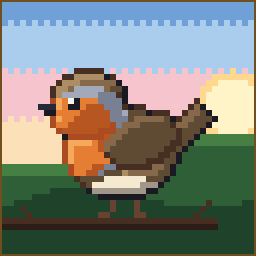
A pink-breasted finch with a blue-grey cap and two white wing bars. The male sings a cascading song that ends in a flourish.
When to look
All year, mostly at dawn and day.
- J
- F
- M
- A
- M
- J
- J
- A
- S
- O
- N
- D
Time of day
- Dawn
- Day
- Dusk
- Night
- Best time
- Dawn to mid-day; sings Feb–June. Winter flocks feed on the ground under feeders.
- Where in the game
- Millbrook (garden, park, churchyard and farmland)
- Size
- Length about 14–15 cm
- Weight
- About 21.8 g (BTO adult average)
- Lifespan
- Typically about 3 years once breeding; oldest ringed bird 13 years 11 months (BTO)
- Population
- About 5.1 million territories in the UK, down 26% since 1967 (BTO)
- Status
- Green (as listed by BTO)
Diet
Seeds and beech mast on the ground; insects for chicks in summer.
Habitat
Woodland, hedges, gardens and farmland; recorded in about 94% of British and Irish squares.
Breeding
4–5 eggs from late April; incubation 12–13 days; chicks fledge about 14 days later (BTO).
Field signs
- Male: pink breast, blue-grey cap, two bold white wing bars; female olive-brown with the same wing bars
- Song: a descending rattle that ends with a flourish; call is a sharp 'pink'
- Feeds on the ground under feeders and bird tables
Did you know?
- Winter numbers rise when migrants from Scandinavia join Britain's resident chaffinches (BTO).
- Chaffinch declines since 2005 have been linked to outbreaks of trichomonosis, a disease spread at dirty feeders (BTO).
- It is one of the commonest birds in Britain and Ireland, yet numbers are down 26% since 1967.
Moments worth waiting for
- Song with a flourish
A male chaffinch sings his falling rattle, and finishes with a flick of the head.
Photo tip
Scatter a little seed on a mossy log and wait from a window. Male in early spring sunlight is the best shot; expose for the pink breast and avoid blown highlights.
Be a good naturalist
Clean feeders weekly; chaffinches are affected by trichomonosis too. Do not feed near where cats can ambush.
The law
Protected under the Wildlife and Countryside Act 1981; it is an offence to damage an active nest.