
No.205 · Birds · Uncommon
Song thrush
Turdus philomelos
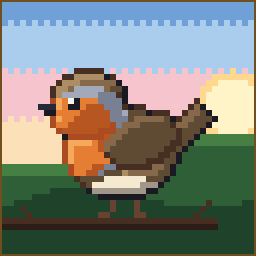
A warm brown thrush with a speckled cream breast, famous for repeating each phrase of its song two or three times. It smashes snails on a favourite stone.
When to look
All year, mostly at dawn, day and dusk.
- J
- F
- M
- A
- M
- J
- J
- A
- S
- O
- N
- D
Time of day
- Dawn
- Day
- Dusk
- Night
- Best time
- Dawn and dusk song from January; snail-breaking on damp mornings.
- Where in the game
- Millbrook (garden, churchyard and park)
- Size
- Length about 23 cm
- Weight
- About 75 g (BTO adult average)
- Lifespan
- Typically about 3 years once breeding; oldest ringed bird 11 years 8 days (BTO)
- Population
- About 1.3 million territories in the UK (2016); down 45% since 1967 (BTO)
- Status
- Amber (as listed by BTO)
Diet
Snails, earthworms and insects; berries in autumn and winter.
Habitat
Essentially a woodland bird that has adapted to parks and gardens; found in about 94% of UK breeding squares.
Breeding
Clutches of about 4 eggs; 2–3 broods a year. Incubation and fledging each about 14 days. First clutches average 21 April (BTO).
Field signs
- Warm brown above, cream below with neat arrow-shaped spots; orange-buff under the wing
- Loud, repeated phrases sung from a high perch at dawn and dusk
- Piles of broken snail shells around a flat stone (a 'thrush anvil')
Did you know?
- A song thrush smashes a snail's shell against a stone to reach the soft body inside; shell piles show where (BTO).
- The UK population fell 45% since 1967, with a steep drop in the 1970s and 80s and only a modest recovery since (BTO).
- Unlike a blackbird, it is rarely seen at feeders; it is most likely to come for snails and worms in a damp, unsprayed garden.
Moments worth waiting for
- Snail on the anvil
A song thrush grips a snail by the lip of the shell and cracks it on a stone, again and again.
Photo tip
Watch the anvil stone at first light on a damp morning and wait at a distance. Sing perch at dawn works in March–May.
Be a good naturalist
Avoid slug and snail poisons: they starve the thrush and can poison it. Keep some lawn edge and leaf litter.
The law
Protected under the Wildlife and Countryside Act 1981; it is an offence to damage an active nest.