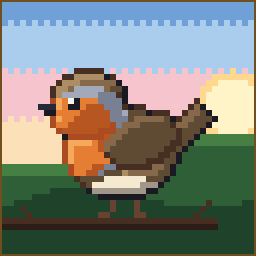

No.003 · Birds · Common
Blue tit
Cyanistes caeruleus
A tiny acrobat with a sky-blue cap, wings and tail. It hangs upside down from feeders and twig-tips, and it is a bird that raises a brood of eight to ten chicks at once.
When to look
All year, mostly at dawn and day.
- J
- F
- M
- A
- M
- J
- J
- A
- S
- O
- N
- D
Time of day
- Dawn
- Day
- Dusk
- Night
- Best time
- All day, all year at feeders; busiest in spring when parents feed caterpillars to chicks (April–June).
- Where in the game
- Millbrook (garden, park, churchyard and urban) and the New Forest (ancient woodland and lawn)
- Size
- Length about 12 cm
- Wingspan
- About 18 cm
- Weight
- About 11 g (BTO adult average)
- Lifespan
- Average about 3 years; the oldest ringed bird lived nearly 10 years (Wildlife Trusts, BTO)
- Population
- About 3.4 million territories in the UK (BTO, 2016)
- Status
- Green (Birds of Conservation Concern 5, 2021)
Diet
Caterpillars and other insects in spring; seeds, peanuts and suet in winter.
Habitat
Woodland, hedgerows, parks and gardens; especially oak woodland.
Breeding
Nests in holes and nest boxes from April; usually 8–10 eggs (average about 9) and normally one brood; the chicks hatch to coincide with the spring caterpillar peak.
Field signs
- High, thin 'tsee-tsee-tsee-tsi-tsi-tsi' song, and a scolding 'churrr'
- Bright blue cap, white face with a dark eye-stripe, yellow underparts
- Small round hole in a tree or box with a ring of dry moss inside
Did you know?
- Blue tits see ultraviolet light, so the blue crown that looks bright to us glows even more to another blue tit; the crest is used in courtship.
- In the 1920s blue tits in Southampton learned to peck the foil tops from milk bottles for the cream; the habit spread across Britain.
- Blue tits time their eggs to hatch when oak caterpillars peak in late spring; a big brood needs thousands of caterpillars, so warm springs that shift the peak can hit breeding success.
Moments worth waiting for
- Upside-down at the feeder
A blue tit clings upside down to a fat ball, swinging as it pecks. - Caterpillar run
A blue tit arrives at a nest hole with a green caterpillar in its bill, and a chorus of chick calls answers.
Photo tip
Put a perch a few metres from a feeder and photograph the birds using it, rather than the feeder itself. A fast shutter (1/2000 s) freezes the acrobatics.
Be a good naturalist
Clean feeders regularly to prevent disease. Do not open nest boxes during nesting; only the licence-holding ringers and the annual nest-box scheme are allowed to check inside.
The law
All wild birds, their nests and eggs are protected under the Wildlife and Countryside Act 1981; it is an offence to kill, injure or take them or damage an active nest. Nest boxes count as nests while in use.